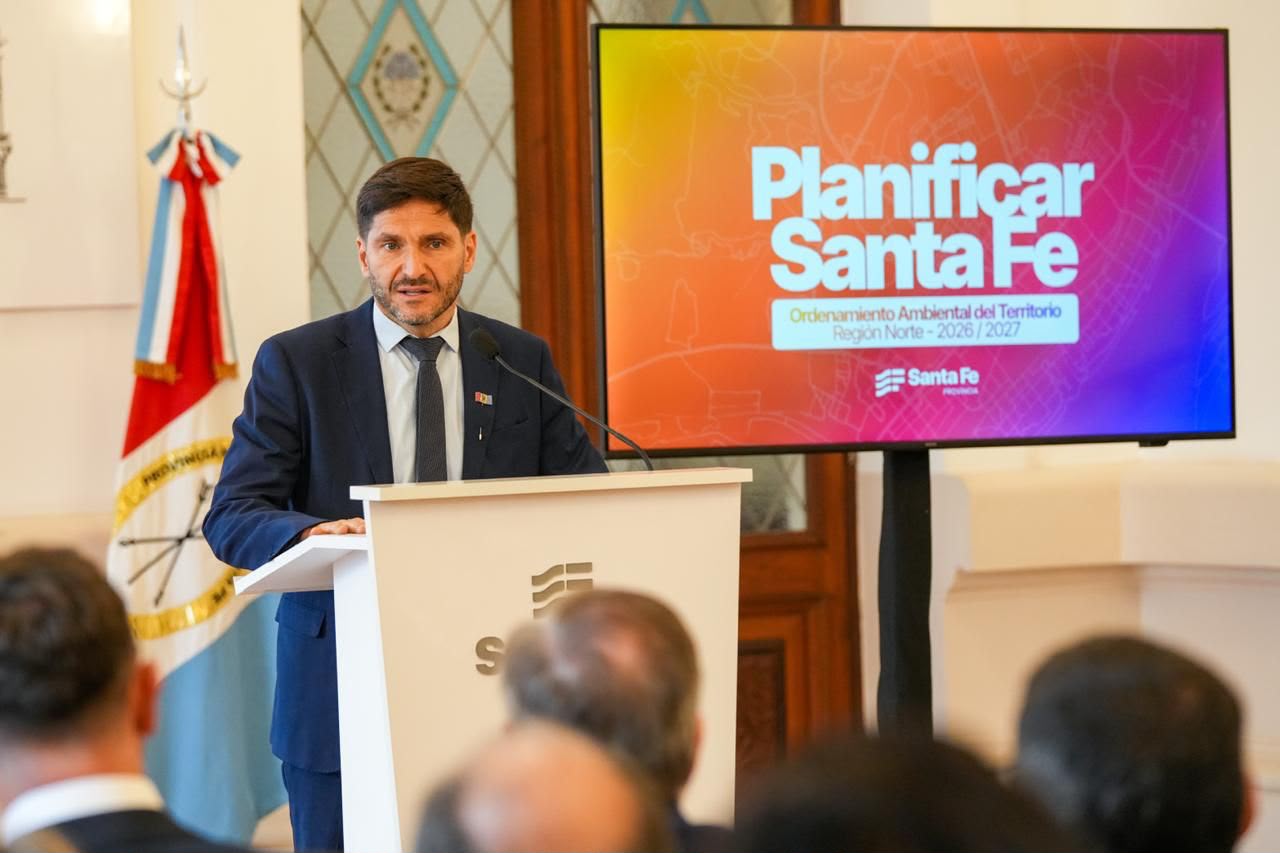
The Governor of Santa Fe, Maximiliano Pullaro, launched the “Planificar Santa Fe-Región Norte” programme on Friday, a land-use planning initiative that will cover 44 towns in the departments of Vera, 9 de Julio, San Cristóbal and San Justo. With an investment of 540 million pesos and funding from the Federal Investment Council (CFI) and the National Technological University (UTN), Reconquista Regional Faculty, this is the most far-reaching Land Use Plan (POT) promoted to date by the province.
The tool will enable the anticipation of conflicts, reduce exposure to environmental risks and guide urban and rural growth through technical criteria for long-term planning. The presentation took place in the White Room of the Government House and was attended by the Minister for the Environment and Climate Change, Enrique Estévez.
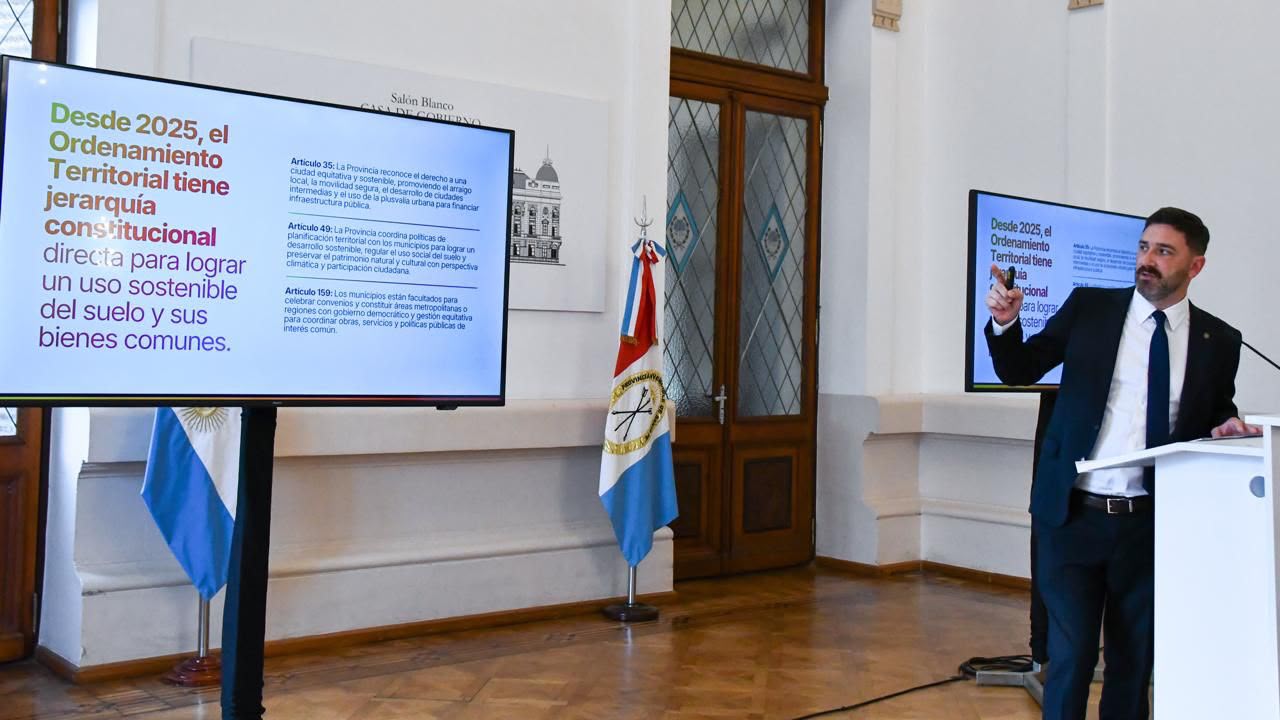
During the event, Pullaro highlighted the importance of promoting public policies that extend beyond the term of a single administration. “There are policies that are matters of state, which go beyond a single administration and will have a positive impact in the long term on the quality of life of our communities,” he stated.
In this regard, he maintained that spatial planning is a key tool for shaping the province’s development. “Planning means knowing what kind of province we want to live in, what the regions we want to build look like, what strengths each of the territories must have, and how we carry out urban and spatial planning,” he noted.
He also emphasised that this is a strategic public policy that encourages debate and decision-making with a forward-looking perspective. “It is a far-reaching policy that prompts us to discuss and make decisions that we know will have a lasting impact on us as a government. What we are doing today goes beyond the immediate and will have a lasting impact on us as a generation,” he added.
State policy with constitutional status
For his part, Estévez emphasised that “environmental planning schemes enable us to establish criteria for land use, incorporate water risk management as a priority, address integrated waste management, promote sustainable mobility and create land for urban development”, he explained.
The minister also emphasised that the working methodology “is a dynamic tool that can be continuously adapted and monitored, with a significant participatory element”, he said.
Regarding the scope of the programme, he explained that this first phase will be implemented in the Bajos Submeridionales basin and will cover 44 districts over the next twelve months. “Next year we will complete a second phase covering a further 30 districts,” he announced.
In this context, he highlighted the progress made in the province’s policy on this matter. Whilst in 2023 barely 2% of Santa Fe’s territory had land-use plans, by 2027 coverage will reach 57%.
Finally, Estévez noted that each process will conclude with the drafting of a local by-law but will also leave technical capacities in place within municipalities and local authorities.
A tool for planning development
Land-use plans aim to strike a balance between production, habitat and the environment through technical and regulatory instruments for long-term planning and management. These instruments are developed through participatory workshops with local stakeholders, enabling the creation of shared assessments and the design of strategies tailored to the specific characteristics of each community.
Santa Fe has now finalised the plans for 23 localities in the General Obligado department, within the Reconquista-Florencia corridor; for 37 localities in the General López, Caseros and Constitución departments; and for 32 districts in the Rosario metropolitan area.
With the inclusion of the 44 localities in Vera, 9 de Julio, San Cristóbal and San Justo during the 2026–2027 period, the province will take a further step towards consolidating a comprehensive spatial planning strategy, with the aim of promoting balanced, sustainable and resilient development in the face of future environmental and productive challenges.