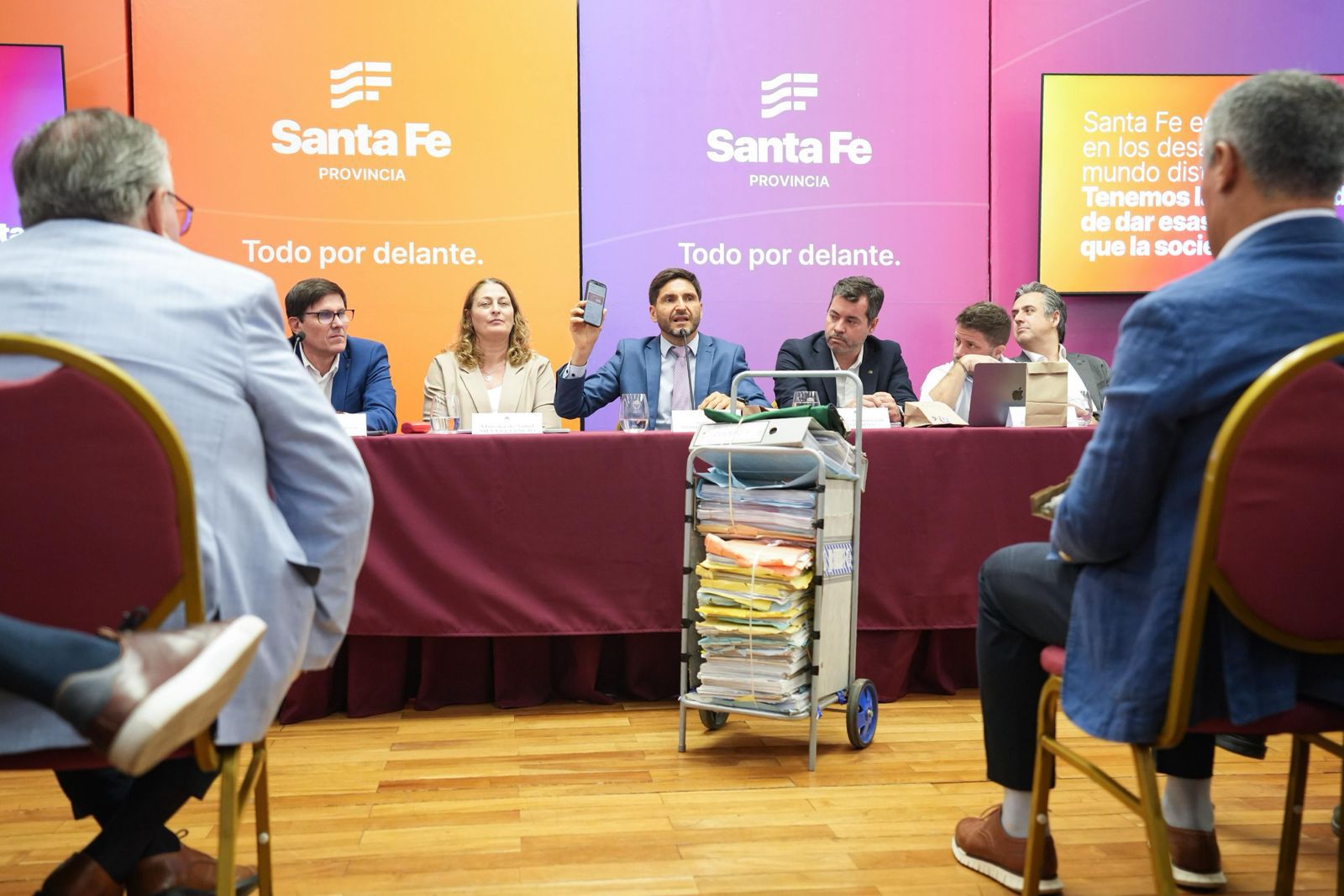
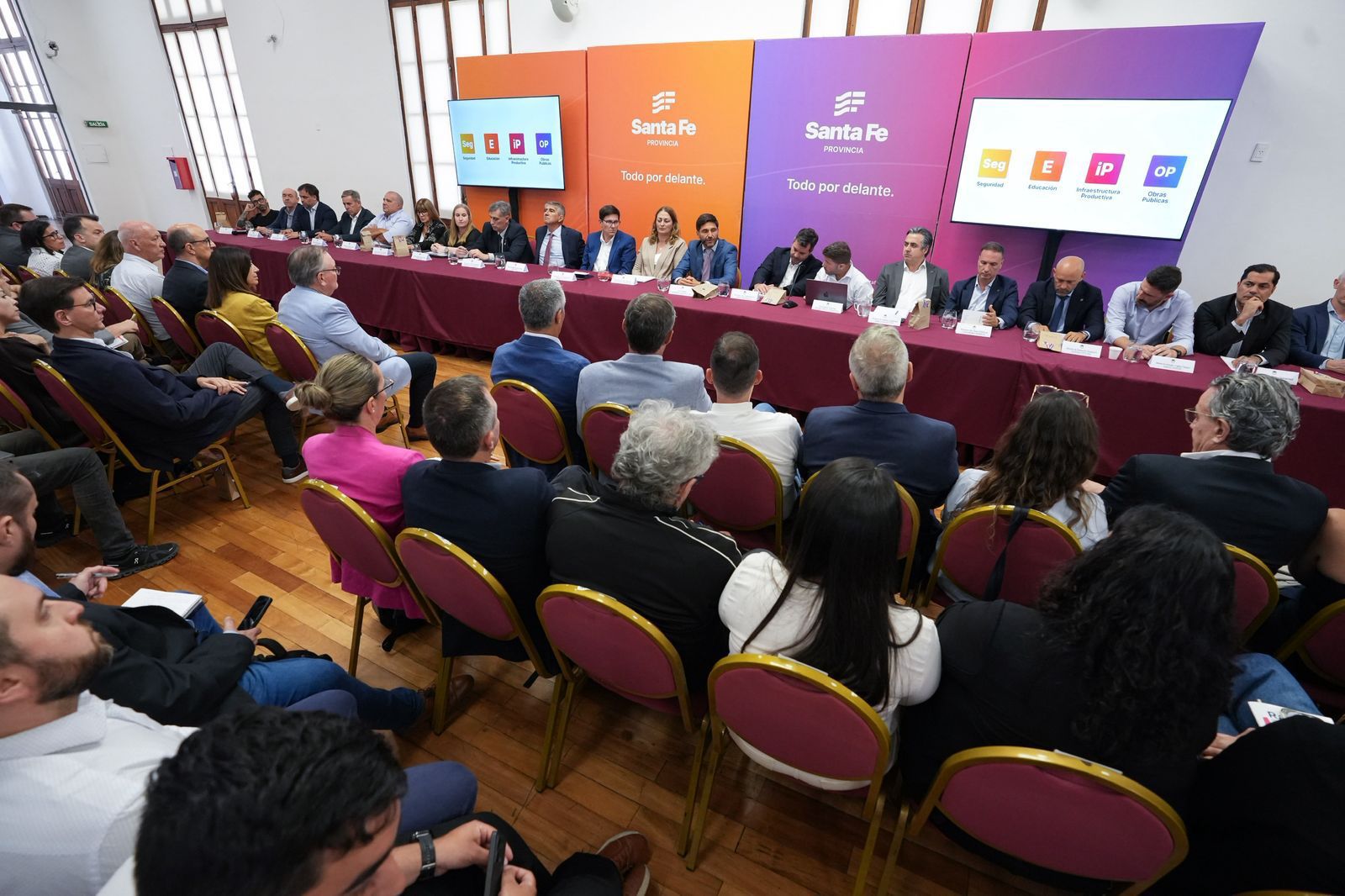
At an extended Cabinet meeting, Governor Maximiliano Pullaro, together with ministers, secretaries, presidents of public companies, legislators and leaders of the parties that make up Unidos para Cambiar Santa Fe, analysed the progress made in the digital transformation project of the Santa Fe State and the central themes for the remaining two years of his administration.
During the meeting at the government headquarters in Rosario, Pullaro highlighted the importance of "reflecting on the direction of the government and planning where we want to go, because we have a very clear working method: we set objectives, plan, execute, monitor and evaluate public policies. This method has enabled us to address urgent and important issues and bring them into line with what society demands".
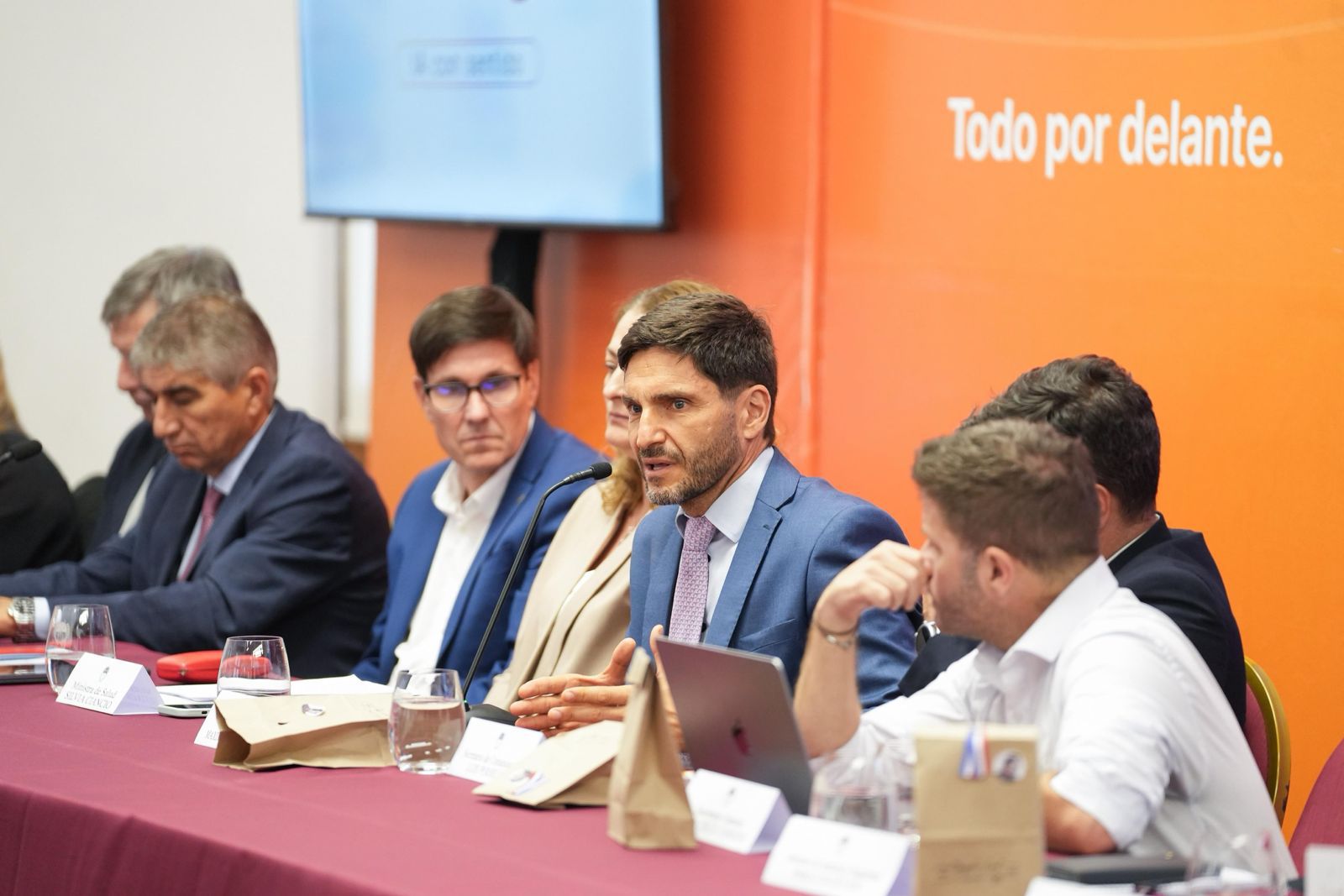
The governor went on to explain that "the first issue we tackled head-on was public safety, because we had to make structural reforms to control prisons and the streets, and violence and crime began to decline, but we are far from achieving our goals: we cannot relax for a single day, because this is not a finished process, it is only halfway there".
"The second issue was to bring order to the education system in order to strengthen educational quality; and the third point had to do with productive infrastructure and public works development: we repaired 3,400 kilometres of roads; we committed to strengthening ports and airports to improve logistics and reduce costs; we began building gas pipelines to lower energy costs. To do this, we had to bring a great deal of order to the province's finances".
Pullaro also recalled that "we talked about a modern and renewed justice system, and through dialogue we were able to carry out a process of complete renewal of the Supreme Court of Justice. It seemed impossible to reform the provincial constitution, yet through dialogue, listening and consensus, we managed to achieve the best constitution in Argentina. It was a difficult path, but if we had not engaged in these debates, putting political capital at stake, it would have been impossible to transform the province of Santa Fe".
"Today, with the new tools provided by Artificial Intelligence, we aim to create a government that is close to its citizens, to make their lives easier. The challenge is to be deeply reformist and innovative, and to work to leave a better state for future generations," said the governor, setting out his immediate goal.
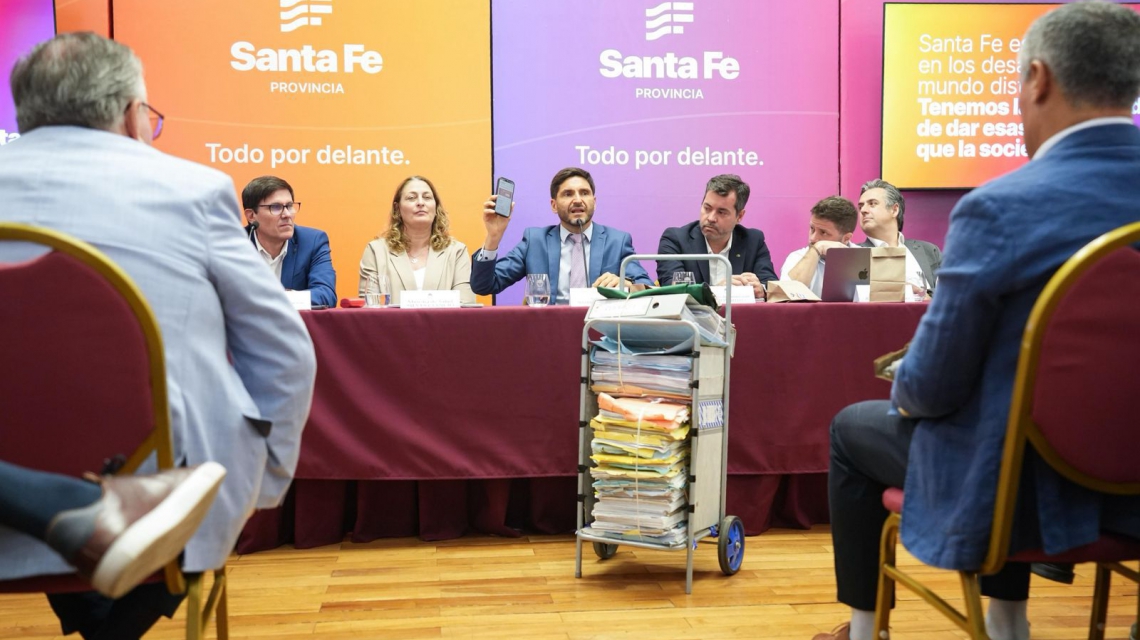
As an anecdote, he showed a cart that, until the beginning of his administration, was used to transport paper files. "Today we have replaced that with this," he said, showing his mobile phone.
Finally, Pullaro indicated that in this second stage, "we are going for digital citizenship, decrease of bureaucratisation and digitisation. We are going for a modern state in the province of Santa Fe".
Digital transformation
Next, Julia Tonero, Legal and Technical Secretary of the Ministry of Government and Public Innovation, and Ignacio Tabares, Secretary of Technology for Management, provided details on the Territorio 5.0 programme, which seeks to modernise public administration and relations with citizens through the intensive use of technology. The goal is to bring public management into a digital environment to make the State more modern, agile, and at the service of citizens.
Next, Paula Manzoni presented "Lince," artificial intelligence technology systems applied to public safety in the province of Santa Fe to significantly improve response times, allowing for rapid clarification of events and crimes.
Education and Health
For his part, the Minister of Education, José Goity, detailed the measures that were implemented to improve educational quality: Plan Raíz, Perfect Attendance, 185 days of classes: "The children are learning, we are improving educational quality and we are encouraging ourselves to think about and plan for a future that we know will be digital and technological, and schools have to prepare for that"; Councillor Lucas Raspall, who is also a psychiatrist and psychotherapist, referred to the incorporation of digital education in schools.
Finally, Health Minister Silvia Ciancio highlighted the strengthening of primary care, the digitisation of information, the creation of Fonres, the modernisation of ambulances, the implementation of a centralised system for the purchase of supplies and medicines, and a comprehensive approach to mental health.
The presidents of the Senate, Felipe Michlig, and the Chamber of Deputies, Clara García, participated, as well as national legislators Carolina Losada, Eduardo Galaretto, José Núñez, and Pablo Farías, in addition to provincial legislators.